
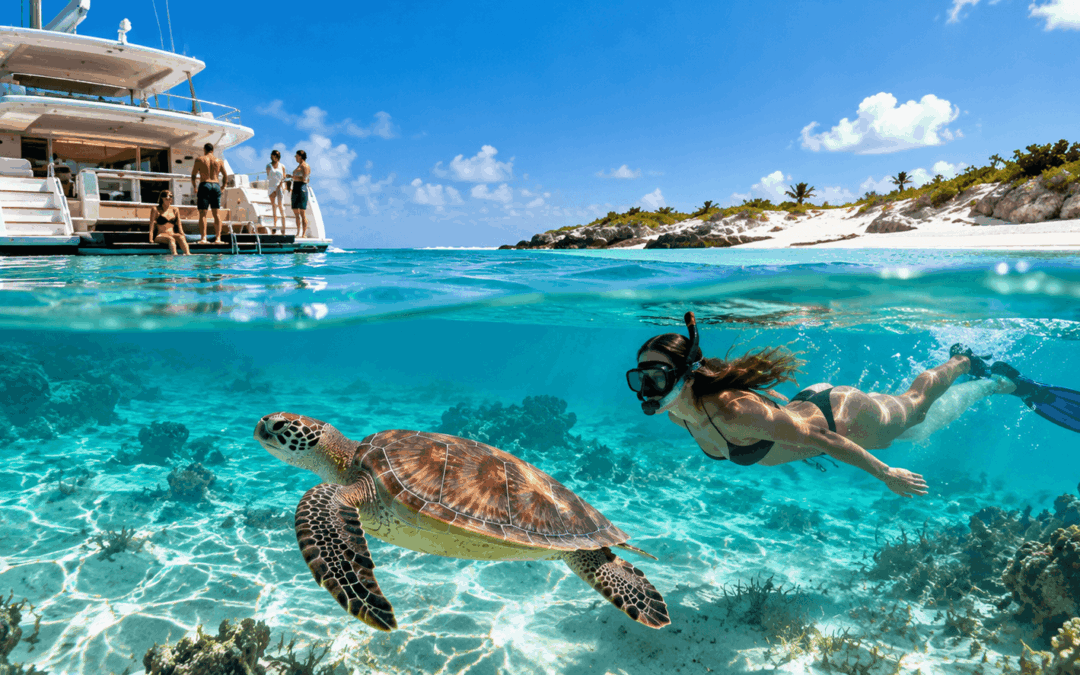
For most first-time visitors, the best months to visit Turks and Caicos are February, March and April. Visit TCI, the islands’ tourism guide, says those months offer the best combination of weather, prices and availability. December through April is the high season, and January through April is the driest stretch. The low season runs from late summer into early autumn and overlaps the Atlantic hurricane season.
Water temperature barely moves across the year, so what actually changes from month to month is sea state, crowds and storm risk. This guide goes through all twelve, with the view from the water, since a boat day is where the calendar shows up first.
What stays the same, and what changes
The constants. Visit TCI puts annual air temperatures at about 75°F to 95°F and ocean temperatures at about 79°F to 85°F, and says air and water are never too cold for the beach.
Rain. January to April is the dry season and August through December the rainy season. May has historically seen higher rainfall averages too. Showers tend to be brief, with sun before and after, and Visit TCI says heavy, extended rain is very uncommon.
The sea. In the winter months, wind and ocean swells run a bit higher and the surface is generally choppier and cooler than in spring, summer and autumn. In late summer, the ocean is usually calm unless a storm is nearby.
Crowds and rates. From December to April, accommodation and some activity rates are often at least 30% to 50% higher than the rest of the year, and availability is limited. Late August, September, October and early November are when rates are typically lowest. In the low season, some businesses close temporarily.
Whales. Humpback whale watching is the only truly seasonal activity. In Visit TCI’s month-by-month guide, the first sightings come in late December, peak in February, and end around the middle of March; its overview extends the season to early April.
January: peak season, choppier seas
Sea and weather: Air temperatures are comfortable, and winds and swells are a bit higher. The sea is generally choppier and cooler than in spring or summer. Crowds and rates: December and January are the busiest months, with rates at their peak. Humpbacks begin to appear off Salt Cay, Grand Turk and Providenciales. On the water: This is the middle of our peak season, which runs from Christmas through mid-February, so book early. Sunset is about 5:18 p.m. on January 1 and 5:38 p.m. on January 30.
February: whale peak, coolest water
Sea and weather: The ocean is at its coolest this month, though Visit TCI is clear it is not cold. Seas are still a bit choppier in winter. Crowds and rates: A noticeable change from the two previous months, but still busy. Valentine’s Day closes our peak. On the water: Whale sightings typically reach their peak. We don’t promise them on any charter. Sunset is around 5:48 p.m. in mid-February.
March: whales leave, spring break arrives
Sea and weather: The water begins to warm a little, and it’s still a bit windier and choppier than in summer, though not by much. Crowds and rates: Spring break brings more arrivals. Visit TCI notes Turks and Caicos doesn’t see the loud spring-break party scene of some other Caribbean destinations, though there may be more people at the beach and on the water. On the water: The final whale sightings come around mid-March. After the clocks change in March, sunset moves to around 7 p.m.
April: steady breeze, Easter crowds
Sea and weather: Temperatures are comfortable, and winds stay consistent. It is the last month of the dry season. Crowds and rates: Still typically busy because of the Easter holidays.
May: calm and warming
Sea and weather: Temperatures begin their climb to the summer highs. Visit TCI describes wind and weather as typically calm and ideal for the beach, snorkeling and diving. May has historically had higher rainfall averages. Crowds and rates: Not as low as September, but activity quiets. On the water: Anything on or in the water other than the wind sports.
June: hurricane season begins
Sea and weather: June 1 is the start of the hurricane season, although storms have historically been uncommon this month. Visit TCI describes the weather as tranquil and hot. Crowds and rates: Activity picks back up a bit. On the water: All the water activities can be great. If weather prevents a charter from operating, we first offer to reschedule, subject to availability, and if that isn’t possible we offer a refund.
July: hot and calm
Sea and weather: July is part of the hurricane season, yet Visit TCI says storms remain statistically unlikely. It’s hot, and often calm. Crowds and rates: A bit of an increase in activity. On the water: Conditions for ocean activities tend to be great, though it can be too hot to explore caves and plantations on land.
August: flat water, rising storm risk
Sea and weather: Air temperatures reach their highs in August and September. Unless a storm is nearby, the ocean is usually calm. Visit TCI says the islands don’t see many hurricanes, but mid-August to September is when one is most likely. Crowds and rates: Not officially the low season, but quiet. On the water: Snorkeling, kayaking and paddleboarding are usually great because of the flat conditions.
September: fewest visitors, highest storm risk
Sea and weather: The beach and ocean are usually calm and beautiful unless a tropical storm or hurricane is nearby. Visit TCI says September has historically had the greatest chance of a hurricane hit, with about a one-in-seven chance. Crowds and rates: The low season and the least busy time of year. Rates are lowest, and some businesses temporarily close. On the water: Check availability before you plan around September.
October: still low season
Sea and weather: It begins to cool down from the summer highs. By now there may have been heavy rains, which can bring mosquitoes to North Caicos, Middle Caicos and some of the private cays. Visit TCI says it is probably not a good month for the plantations and sights of North and Middle Caicos. Crowds and rates: The lull continues, and rates stay at their lowest. On the water: Anything on or in the ocean works.
November: the turn
Sea and weather: The consistent breezes and swells of winter begin to return. Temperatures become excellent and the ocean stays warm. November is the last month of the hurricane season. Crowds and rates: The slow season has ended. Visit TCI says prices are up and availability is down. On the water: Our 2026–27 rates take effect November 1, and VENUS, our 51-foot power catamaran, is open for reservations now through Book Now. Sunset is about 5:11 p.m. on November 2 and 5:07 p.m. on November 12.
December: the busiest month
Sea and weather: The ocean can be a little choppy at times, with some swell, though temperatures in and out of the water are great. Crowds and rates: The high season begins. Visit TCI calls December the busiest month of the year and recommends booking accommodation and activities in advance. Humpback whales make their first appearance late in the month. On the water: Sunset is about 5:05 p.m. in early December and 5:11 p.m. around December 20.
Sunset times, November to March
Sunset matters for a sunset charter, and in winter it comes earlier than most visitors expect.
| Date | Sunset (local time) |
|---|---|
| Nov 2 | 5:11 p.m. |
| Nov 12 | 5:07 p.m. |
| Dec 5 | 5:05 p.m. |
| Dec 20 | 5:11 p.m. |
| Jan 1 | 5:18 p.m. |
| Jan 30 | 5:38 p.m. |
| Feb 16 | 5:48 p.m. |
| Mar 4 | 5:55 p.m. |
After the clocks change in March, sunset moves to around 7 p.m.
Choosing by what matters to you
| If you want… | Look at |
|---|---|
| The most settled weather and the longest list of things to do | December through April |
| The calmest water for snorkeling | May through September, per Visit TCI’s conditions, with the caveat about storms |
| To stay clear of storm risk | Avoid mid-August through September |
| A chance at humpback whales | Late December through mid-March |
| Lower accommodation rates | Late August through early November |
| Sunset charters | November through early March, when sunset falls between about 5:05 and 5:55 p.m. |
Things to do in Turks and Caicos, by season
On a Providenciales boat day, the staple stops are the cays east of the island: Little Water Cay, Half Moon Bay, Water Cay and Fort George Cay.
To check dates for your trip, see availability and book your charter.