
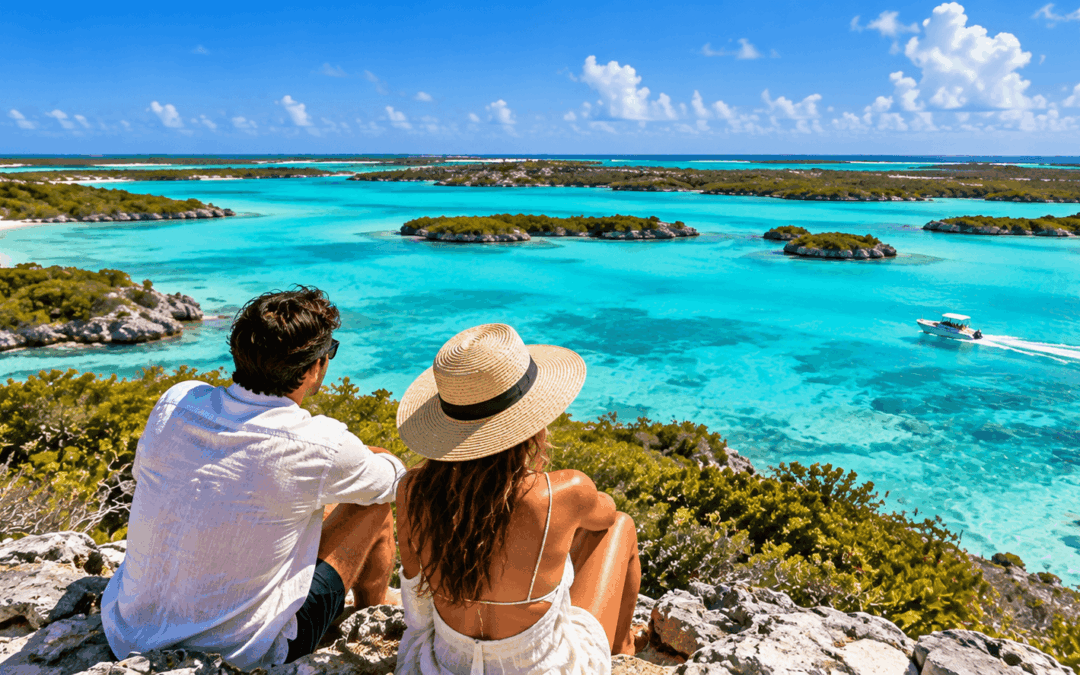
The best things to do in Turks and Caicos are a private boat day around the cays, Grace Bay Beach, snorkeling the barrier reef, Chalk Sound, Little Water Cay’s iguanas, Fort George Cay’s sandbars and cannons, and a day trip to Grand Turk. Most are on or near the water, and the best are only reachable by boat.
Every “things to do” list for Turks and Caicos calls everything a must-see. It isn’t. You have a few days, and some famous attractions are better than others. Some are free, some are overhyped, and some only make sense in certain months or areas.
We’ve run private charters out of Turtle Cove Marina for years and talk to guests daily about how they spent their time. This is our ranking. We run boats, so boats rank high. We give our reasoning for each pick, and what we’d skip.
Quick answer: our top 10
Cost key: Free · $ under about $50 per person · $$ moderate · $$$ significant.
| Rank | Thing to do | Cost | Best for |
|---|---|---|---|
| 1 | A private boat day around the cays | $$$ | Families, groups, celebrations |
| 2 | Grace Bay Beach | Free | Everyone |
| 3 | Snorkel the barrier reef | $–$$$ | Everyone |
| 4 | Chalk Sound National Park | Free–$ | Photographers, couples |
| 5 | Little Water Cay (Iguana Island) | $ | Families, wildlife |
| 6 | Fort George Cay and the sandbars | Included in boat trips | Beach lovers |
| 7 | The La Famille Express shipwreck | Included in boat trips | Adventure seekers |
| 8 | A day trip to Grand Turk | $$ | History, diving |
| 9 | Sunset cruise or dinner on the water | $$–$$$ | Couples, celebrations |
| 10 | A local fish fry | $ | Food lovers |
1. A private boat day around the cays
Why it’s #1: The best beaches are on cays with no roads, the best reef is a mile offshore, and the sandbars move with the tide. Only a boat links them in one day.
What it looks like: a professional crew takes your group from Turtle Cove Marina along the north shore, with stops for snorkeling on the reef, Iguana Island or Half Moon Bay, a beach or sandbar at Pine Cay or Fort George Cay, and lunch on board or on the sand. On a full day you can go farther and add a second island. Everything is your call.
The catch: a private charter is the priciest item here, but at six or more guests the per-person cost is lower than most people expect. Our new 51-foot power catamaran, VENUS, carries up to 25 guests, so a big group can share one boat. Our pricing guide shows the math. If you’re a couple on a tight budget, a shared tour may be better value. For families, friend groups and celebrations, this is the day people remember.
2. Grace Bay Beach
Why it’s here: it’s the reason most people come. A long, gently curving stretch of soft white sand and shallow turquoise water, protected by a reef offshore, and inside Princess Alexandra National Park.
What to know:
- It’s free, and the beach is public, though most of the resorts are located along it.
- It’s a beach for walking and swimming, not for snorkeling. The healthy reef is roughly a mile out, so the water directly off the beach is mostly sand.
- Go early or late for the best light and the fewest people.
The catch: it matches the photos, but the best sand in the country is on cays you reach by boat.
3. Snorkel the barrier reef
Why it’s here: the barrier reef along the north shore of Providenciales is one of the great snorkeling reefs of the Caribbean, with turtles, rays, parrotfish and reef sharks in shallow, clear water.
Two ways to do it:
- From shore, at Bight Reef (Coral Gardens) or Smith’s Reef, both within Princess Alexandra National Park. Free, easy and good for beginners.
- By boat, at Leeward Reef, Pine Cay, Fort George Cay and the barrier reef itself. More variety and healthier reef, with a captain choosing the best site for that morning’s conditions.
The catch: shore snorkeling is a good start, but the boat trips reach the better reef. We wrote a full snorkeling guide covering every site, what you’ll see, and the best time of year.
4. Chalk Sound National Park
Why it’s here: Chalk Sound, on the southwest side of Providenciales, is a shallow lagoon dotted with small rock islands. The pale sand bottom and shallow depth turn the water an almost neon turquoise.
What to do: drive around the lagoon for viewpoints, paddle or kayak on calm days, or take a guided tour. Photographers love it.
The catch: it’s an hour or two, not a whole day. Combine it with the beaches on the south shore, and go on a sunny morning when the light is best.
5. Little Water Cay (Iguana Island)
Why it’s here: a protected sanctuary for the Turks and Caicos rock iguana, an endangered species found nowhere else. Boardwalks let you get close to the iguanas without disturbing the habitat, and kids love it.
What to know:
- Access is managed by the Turks and Caicos National Trust, and all visits stay on designated boardwalks and paths.
- Admission is separate from a boat tour, and the fee funds conservation. Prices have been $20 for the trails and $10 for Half Moon Bay (2024 figures; confirm current rates).
- You reach it by boat. There is no public transport to the cay.
- Stay on the trail. The iguanas’ burrows sit beside the path.
The catch: it’s a stop of about an hour. Pair it with Half Moon Bay’s lagoon next door. It’s a good first stop with kids.
6. Fort George Cay and the sandbars
Why it’s here: Fort George Cay is a quiet spot at the northern end of the Caicos Bank that was once a military outpost. The cannons left by British loyalists are still there, and snorkelers can swim over sunken cannons dating to the 1800s. Around it and Pine Cay, sandbars appear and shift with the tide, and they feel like a private beach.
What to do: anchor, wade the sandbar, hunt for shells and sand dollars, snorkel, or have lunch on the sand.
The catch: the appeal is solitude, and a shared tour boat arriving at the same time ruins it. Go private and time your visit around the crowds.
7. The La Famille Express shipwreck
Why it’s here: a few miles off the coast, the wreck of the La Famille Express (also called the Long Bay Shipwreck) has become one of the islands’ best-known adventure stops. Guests climb, jump and snorkel around it. The vessel began life decades ago in the Soviet Union as an oil-field supply ship.
What to know: it’s an optional stop. Jumping is at your own risk, and the crew will brief you on how to do it sensibly. Not everyone in the group needs to jump, and the wreck is fun to snorkel around too.
The catch: it’s a 30-minute stop. Skip it, or make it optional, if your group includes very young children or nervous swimmers.
8. A day trip to Grand Turk
Why it’s here: Grand Turk is the historic heart of the country. Cockburn Town has colonial-era architecture, there’s a lighthouse, and the wall diving off the island’s western coast is world-renowned among divers.
What to know: Grand Turk is a separate island from Providenciales, so it’s a full-day trip by air or sea. The pace is slower and quieter than Provo, and a cruise ship terminal means busy days when ships are in.
The catch: worth it with five or more days, an interest in history or diving, or a previous Provo trip. If you only have a long weekend, spend the time on the water around Providenciales.
9. A sunset cruise or dinner on the water
Why it’s here: the sun sets over the west side of Providenciales, and you watch it from the water with a drink in your hand.
What to know:
- Timing shifts with the season. In winter the sun goes down around 5:30 pm, so cruises start earlier.
- Shared party boats and private cruises are very different. If you want quiet and romance, go private.
- A sunset dinner cruise adds a meal to the water time and is a favorite for proposals, anniversaries and birthdays.
The catch: a sunset cruise is 2.5 hours, so it fits around other plans easily. If you’re doing a full day on a boat, consider it a separate evening trip rather than trying to combine them. Ask us about our sunset and dinner cruises.
10. A local fish fry
Why it’s here: the food and the atmosphere. Local fish fries are a chance to eat fresh conch, fish and local sides, listen to live music and meet residents.
What to know: fish frys are typically weekly evening events, and schedules and locations can change, so confirm times with your hotel or local sources before you go.
The catch: none. Go hungry and dress casually. It costs little and shows you the islands beyond the resorts.
Also worth your time
Cheshire Hall Plantation ruins. The remains of a Loyalist cotton plantation on Providenciales, and a quick look at the island’s history.
Whale watching in winter. Humpback whales migrate through Turks and Caicos waters in the early months of the year, roughly late January through March. Whale trips typically operate from Grand Turk and Salt Cay rather than Providenciales, so plan them as a dedicated trip.
North and Middle Caicos. Quieter, greener and less developed than Provo. Middle Caicos is home to a large cave system and remote beaches, connected to North Caicos by a causeway. Best for a full day with a rental car or a guided tour, and for repeat visitors.
Mangrove kayak and paddleboard tours. A slow, quiet way to see juvenile fish, turtles and rays in the mangroves of Princess Alexandra Nature Reserve.
Scuba diving. Turks and Caicos has some of the Caribbean’s best diving, especially on the reef wall. Dive operators handle certifications, briefings and gear.
Best things to do by type of traveler
- With kids. Little Water Cay’s iguanas, Half Moon Bay’s shallow lagoon, sandbar time, and a shallow snorkel stop. A private boat lets you run the day around naps and snacks. Read our notes on snorkeling with kids.
- As a couple. A private sunset or dinner cruise, a quiet morning at a sandbar, and a slow dinner at a beachfront restaurant.
- With a group of friends. A full-day private charter with music, paddleboards and optional water toys, then a fish fry in the evening.
- For adventure. The shipwreck, a jet ski ride, scuba diving on the reef wall and a mangrove paddle.
- For history. Fort George Cay’s cannons, Cheshire Hall’s plantation ruins and a day in Cockburn Town on Grand Turk.
- For nature. The rock iguanas at Little Water Cay, the mangroves of Princess Alexandra Nature Reserve and the winter whale season.
Free and low-cost things to do
Not everything on a good trip costs money. These are free or close to it:
- Grace Bay Beach: public access, and some of the best walking and swimming on the island.
- Bight Reef (Coral Gardens) and Smith’s Reef: free shore snorkeling inside Princess Alexandra National Park. Bring your own gear or rent it.
- Chalk Sound viewpoints: the color is free.
- South-shore beaches such as Sapodilla Bay and Taylor Bay, generally calm and shallow, which makes them popular with families.
- A local fish fry: an inexpensive meal and a lively evening.
If it rains
Showers in Turks and Caicos are usually short, and the weather can be different a few miles away. If you get a wet day:
- Reschedule outdoor plans rather than cancel them. A boat day pushed to tomorrow is usually better than a rushed one today.
- Visit Cheshire Hall, which is compact and can be done quickly between showers.
- Browse the shops at Saltmills Plaza or take a long lunch.
- Book a spa treatment, since many resorts offer them to non-guests.
- Check the forecast and call your operator. Our policy is that if conditions are considered unsafe or unsuitable, you can reschedule or receive a full refund.
What we’d skip, shorten or handle carefully
What we’d skip or change:
- Spending the whole trip at a resort pool. The water is the point. Even one day on a boat changes the trip.
- Trying to see every island in one visit. Turks and Caicos is spread out. Pick a handful and do them properly.
- Cramming a full-day boat trip and an evening event on the same day. Everyone is tired by dinner.
- Booking the cheapest shared tour for a big family. It can work, but with strangers, a fixed schedule and crowds, a private day often costs less per person than the ticket price suggests.
- Driving off with valuables in the car at remote beaches and reefs. Leave them at the resort.
Planning your days
Starting points. Adjust for your group and the weather.
3 days
- Day 1: Arrive, Grace Bay Beach, an easy dinner
- Day 2: Full or half-day boat trip: reef, iguanas, sandbar
- Day 3: Chalk Sound, south-shore beaches, sunset
5 days
- Days 1 to 3 as above
- Day 4: Mangrove paddle or shore snorkel at Bight Reef and Smith’s Reef, evening fish fry
- Day 5: Shopping, a slow morning, or a sunset dinner cruise
7 days
- Days 1 to 5 as above
- Day 6: Grand Turk day trip, or North and Middle Caicos
- Day 7: A second boat day, this time to a different set of cays
When to go
- December to mid-February: the busiest and most sought-after weeks, and a common time for Christmas and New Year trips.
- March: spring break brings big U.S. crowds.
- April to June: quieter and warm, with good availability.
- July to August: hot and calm, a favorite for families. Lobster season is open August through March.
- September and October: the quietest months in the islands and part of the Atlantic hurricane season. Some businesses reduce their schedules or close, so check before you plan.
Getting around
- Rent a car if you want to see Providenciales beyond Grace Bay, since public transport is limited. Drive on the left.
- Taxis are available but add up quickly.
- The U.S. dollar is the currency.
- Book popular activities early in peak season, especially boat charters, sunset trips and Iguana Island access.
Plan your boat day
For a private day on the water, we run half-day, full-day and sunset charters from Turtle Cove Marina, with meals, drinks, snorkel gear and paddleboards included. Explore our private boat charters, meet the boats on our fleet page, or check availability on our online booking calendar. You can also call (649) 232-3633 or message us on WhatsApp.
Frequently asked questions
What is the number one thing to do in Turks and Caicos?
A boat day around the cays: snorkeling the barrier reef, visiting Iguana Island and Half Moon Bay, and stopping at a sandbar or quiet beach. The best of the country is on or beside the water, and a boat reaches all of it in one day.
How many days do you need in Turks and Caicos?
Three days covers the essentials: beach, a boat day and a sunset. Five days adds snorkeling from shore and local food. Seven or more lets you add Grand Turk or North and Middle Caicos.
Is Grace Bay Beach worth it?
Yes. It’s free and easy to reach. But the healthiest reef and the quietest beaches are on cays reached by boat, so add a boat day.
What is the best time of year to visit Turks and Caicos?
December to March is the busiest, with the strongest demand. April to June and July to August are quieter, and September and October are the quietest months and fall in hurricane season.