
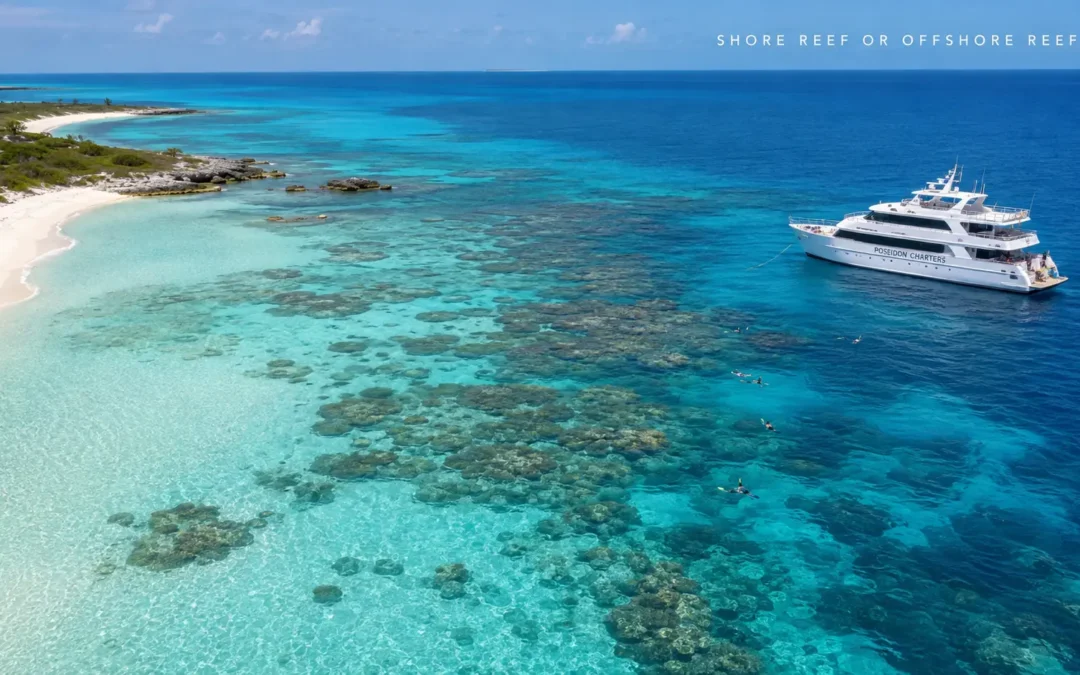
Providenciales has more than one kind of snorkeling, and mixing them up leads to a disappointing morning. Some of the best reefs sit close enough to wade in from the beach. Others sit far enough offshore that a boat is the only real way to reach them. This guide covers the best snorkeling spots in Providenciales, which ones you can reach on foot, when a boat trip actually makes sense, and which reef fits your experience level.
Where Is the Best Snorkeling in Providenciales?
There is no single best reef for every visitor. A shallow, calm spot that feels perfect for a first-time snorkeler can feel underwhelming to someone who has snorkeled reefs around the world. A dramatic offshore site that thrills a confident swimmer can feel intimidating to a nervous one. The right answer depends on who is asking. Families want shallow, protected water close to shore. Confident swimmers want more variety and depth. Anyone combining snorkeling with a yacht day wants a spot the captain can choose and read on the day itself, based on real conditions rather than a fixed stop picked in advance.
Providenciales Snorkeling Spots, Matched to the Experience You Want
Bight Reef and Coral Gardens: Best for Convenient Shore Access
Bight Reef, often called Coral Gardens, sits just off the beach along the Bight, a short walk from several Grace Bay area hotels. Because it starts in shallow water and needs no boat, it is one of the easiest reefs in Providenciales to reach on your own schedule. The reef itself is compact, with coral formations close enough together that a beginner can see plenty without swimming far. That mix of easy access and shallow depth is why families and first-time snorkelers so often start here.
Smith’s Reef: Best for Exploring Multiple Reef Areas
Smith’s Reef sits a short distance from Coral Gardens and gives a swimmer more ground to cover. Instead of one compact patch, it spreads across several distinct formations, so the visit feels more like exploring than floating over a single reef. It still starts from shore, so no boat is required, but the larger area rewards a swimmer who is comfortable covering more distance and reading the water with a bit more independence.
Leeward and Offshore Reefs: Best for Boat-Based Exploration
Some of the most impressive reef around Providenciales sits well offshore, in the Leeward area and along the outer barrier reef, and simply cannot be reached without a boat. These sites tend to offer deeper, more varied coral and a better chance at bigger marine life than the shore spots see. A boat also lets a captain pick the best reef for that day’s conditions instead of committing to one fixed shore spot no matter what the wind or visibility is doing. This is where snorkeling stops being a solo activity and becomes part of a full charter day.
More Remote Reef Areas: Best for Travelers Who Want a Bigger Day
Further offshore, conditions and travel time start to matter more than any single reef’s name. Reaching these areas usually means a longer charter and a captain making real-time calls about where the water looks best that day. This is less about chasing one specific reef and more about handing that decision to a crew who reads conditions daily. Travelers planning a full day on the water, rather than a quick snorkel, are the ones who benefit most from going this far out.
Which Snorkeling Spot Is Right for Your Experience Level?
First-Time Snorkelers
Comfort matters more than scenery on a first attempt. Calm, shallow water with a shore entry, like Coral Gardens, removes most of the anxiety that comes with trying something new. Gear that actually fits, plus a few minutes practicing breathing in shallow water before heading toward the reef, makes a bigger difference than which specific reef gets chosen.
Families With Children
Swimming ability and supervision matter more than a child’s age. A shallow, shore-accessible reef with calm water gives adults room to stay close without constantly fighting current. Shorter sessions also work better than one long swim, since kids tire faster in open water than most parents expect.
Confident Snorkelers
Experienced swimmers tend to get more out of offshore and boat-accessible reefs, where depth, coral variety, and the odds of bigger marine life all go up. A captain who can move between spots based on that day’s visibility is worth more to this group than any single named reef.
Shore Snorkeling vs Boat Snorkeling: What Actually Changes?
Shore snorkeling has real advantages. It costs less, needs no booking, and lets you go whenever the mood strikes instead of working around a charter schedule. For a short outing or a spare hour between other plans, that convenience is hard to beat. Boat snorkeling changes what is actually reachable. Offshore reefs and the outer barrier reef sit beyond swimming distance from any beach, so a boat is the only way to see them. A boat trip can also combine snorkeling with a beach stop or a cay visit, turning one activity into a fuller day on the water. Neither option is automatically better. A quick solo swim before dinner calls for a shore reef. A full day built around reef, beach, and open water calls for a boat.
What Marine Life Might You See?
Providenciales reefs support a wide range of marine life, though what shows up on any given day is never guaranteed. Expect reef fish in a wide range of colors and sizes, along with coral formations in both hard and soft varieties. Sea turtles and rays turn up often enough that many visitors spot at least one during a trip, though neither is something any charter can promise. Treat any sighting as a bonus rather than an expectation, and the day feels good regardless of what swims by.
Snorkeling Safety and Reef Etiquette
A good snorkeling day starts with respecting conditions, not just the reef. Currents can shift through the day, so check with your captain or guide before swimming farther than you can comfortably return from. Stay within your own ability instead of matching a stronger swimmer in your group. Keep a buddy in sight at all times, even in calm, shallow water. Never stand on coral or grab it for balance, since live coral is fragile and slow to recover. Avoid touching or chasing marine life, including anything that looks harmless. Wear reef-safe sunscreen, since regular sunscreen can damage coral over time, and reapply as the day goes on. Bring water and drink it regularly, since it is easy to get dehydrated while focused on what is below the surface.
How to Build Snorkeling Into a Half-Day on the Water
Snorkeling works best as part of a bigger day rather than the only activity. Poseidon’s half-day private yacht charter pairs a snorkeling stop with cruising time, a nearby cay, and food and drinks back on board. That structure solves the biggest limit of shore snorkeling, since a boat can reach reef that a beach entry never could, then move on to a second stop once everyone is ready. For visitors who want offshore reef access without planning it themselves, this is the more direct way to get there.
Explore Providenciales Above and Below the Water
Once you know which kind of snorkeling actually fits your trip, turning it into a full day gets simple. Explore Poseidon’s half-day private yacht charter to combine offshore reef access with a cay stop and time to relax on board, or browse the yachts to see which one suits your group.
FAQs
Is Grace Bay Beach itself good for snorkeling?
Corrects a real misconception, and ties directly to the “Grace Bay snorkeling” secondary keyword from the brief
What is the best time of day to snorkel in Providenciales?
Practical timing guidance not covered anywhere else in the piece
Do you need your own snorkel gear, or is it provided?
Grounded in a verified brand fact (Poseidon’s FAQ confirms gear and vests are included on charters), so it’s genuinely useful rather than generic
Can you snorkel in Providenciales year-round?
Seasonal question, answered honestly with the same hedged, no-guarantees approach used everywhere else in the system